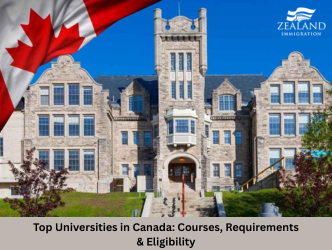
Canada's worldwide acceptance for studying abroad has tremendously increased. Each year, thousands of students are accepted into institutions because of the many programs offered, acceptance rate, area, and ranked institutions. Canadian universities possess modern and constructive learning methods, great employment rates, and qualitative education. Whether it is an undergraduate degree, advanced research programs, or anything in between, Canada has bottomless possibilities for students.
This guide includes an overview of education, popular courses, top universities, admissions, requirements, eligibility, Canadian education systems, visa processes, and post-graduate career prospects.
Table of Contents
- Why Study at Top Universities in Canada?
- List of Top Universities in Canada
- Popular Courses Offered by Canadian Universities
- 1. Undergraduate Programs
- 2. Postgraduate Programs
- 3. Professional and Research Programs
- Admission Requirements for Canadian Universities
- 1. Academic Requirements
- 2. Language Performance (IELTS/TOEFL/PTE)
- Eligibility Criteria for International Students
- Application Process for Canadian Universities
- Documents Required for Admission
- Student Visa Requirements for Canada
- Career Opportunities After Studying in Canada
- Conclusion: Choosing the Right University in Canada
Why Study at Top Universities in Canada?
Studying at Top Canadian Universities gives students numerous benefits outside of learning.
- Internationally Recognized Credentials: Degrees from Canadian universities are valued all over the world.
- Cost-Effective Learning: Learning in Canada is cheaper than in other countries with English as the main language.
- Diverse Community: People from many different backgrounds and cultures enrich the campus environment.
- Work Opportunities after Studies: Graduates are provided the ability to work in Canada after completing their studies.
- International Students: Canada is known to be a safe and peaceful country with a high standard of living, which is very attractive to international students.
These are the primary reasons why universities in Canada are a great option for students pursuing opportunities abroad.
List of Top Universities in Canada
Several top-ranked global universities are based in Canada and offer many different types of programs. Some of the best-ranked universities are:
- University of Toronto - Famous for medical science, engineering, and research
- University of British Columbia(UBC) - Known for science, business, and arts
- McGill University - Well-known for programs in management, law, and medicine
- University of Alberta - Known for energy and engineering research
- University of Waterloo - Famous for co-op programs, IT, and technology
- Western University - Known for social sciences and business
- McMaster University - Well-known for research-based education in health sciences
These universities provide good support services and maintain high academic standards.
Popular Courses Offered by Canadian Universities
Universities across Canada provide thousands of programs across their schools that meet the needs of the industry. Here are a few programs that are in the highest demand.
1. Undergraduate Programs
Undergraduate degrees take 3 or 4 years and are focused on getting students on a solid footing and starting to build foundations. Some bachelor's programs include.
- Bachelor of Engineering (Mechanical, Civil, Electrical, Software)
- Bachelor of Computer Science
- Bachelor of Business Administration
- Bachelor of Arts and Social Sciences
- Bachelor of Science (Biology, Chemistry, Physics)
These programs, in addition to their professional expertise, help students develop their analytical, technical, and communication skills.
2. Postgraduate Programs
Postgraduate programs are perfect for students who wish to broaden their horizons and want to gain more knowledge, as well as want to gain a bit of specialization. Some master's programs include.
- Master of Business Administration (MBA)
- Master of Data Science
- Master of Engineering
- Master of Public Health
- Postgraduate Diplomas in Management, IT, and Healthcare
Most Canadian postgraduate programs include an internship or co-op as a component of the curriculum.
3. Professional and Research Programs
Universities in Canada provide students who are interested in Research or Professional careers:
- PhD and Doctoral Programs
- Research-based Master's degrees
- Professional programs in Law, Medicine, and Education
These programs are more intensive and work focused and prepare students for their professional and academic careers as well as for their professional and leadership roles in society.
Admission Requirements for Canadian Universities
Along with the admission requirements of programs and schools being different, there are some things that are the same across the board.
1. Academic Requirements
As you might assume, this variable plays the most important role in whether or not you are accepted. These requirements may include:
- An applicant must have their high school certificates for undergraduate programs.
- An applicant must have a Bachelor's degree for post-graduate degree programs.
- Must have a number or GPA required by the universities they are applying to.
- Must have so-called 'technical courses' for the specific subjects.
Because of the competition amongst these schools, the top universities in Canada have especially high cut-offs.
2. Language Performance (IELTS/TOEFL/PTE)
Given that most instruction is in English, international students must show proof of language proficiency. Standard tests that are accepted are:
- Academic IELTS with an overall score between 6.0 and 7.0, depending on the program.
- TOEFL overall score between 80 and 100.
- PTE is accepted by most universities, but specific score requirements must be fulfilled.
This proof of proficiency is required for admission and is necessary for the Canada student visa, which is why it's very important to meet these requirements.
Eligibility Criteria for International Students
To study at a university in Canada, international students must:
- Pass the required academic and language tests
- Have a passport that is valid
- Provide proof of ability to pay tuition and living expenses
- Get an offer letter from a valid Canadian university
- Pass the health and character assessments
Depending on the province and course, some of the above requirements may vary.
Application Process for Canadian Universities
The process of applying is straightforward but needs a few steps.
- Pick a few universities and some courses based on your profile.
- Look at the requirements for admission and the deadlines.
- Get your academic and language documents ready.
- Apply via the university portal or centralized system.
- Once you get the offer, accept it, and pay the tuition deposit.
You are more likely to get in and win scholarships if you apply early.
Documents Required for Admission
Students need to complete the following for admission to Canadian Universities:
- Transcripts and proof of educational certifications
- Test results of the English proficiency exam
- Statement of purpose (SOP)
- Letter of recommendations (LORs)
- Current resume/CV (for graduate programs)
- Passport copy
Having documentation organized enables smooth processing of applications without delays.
Student Visa Requirements for Canada
Students can apply for a Canadian student visa only after receiving an offer letter. Important details needed for the visa are:
- Letter of Acceptance from a Designated Learning Institution (DLI)
- Proof of funds for tuition and living expenses
- Passport
- Medical examination report
- Statement of purpose for the visa
- Biometrics
The chances of getting a visa are higher if the application is ready and complete. Zealand Immigration India helps students with the visa process and helps them avoid mistakes.
Career Opportunities After Studying in Canada
University graduates in Canada have promising career opportunities. After students finish their education, Canada gives them a Post-Graduation Work Permit (PGWP) that allows them to work for three years.
Some desired career streams are:
- Information Technology and Software Development
- Healthcare, Life Sciences, and Engineering Construction
- Data Analytics and Artificial Intelligence
- Business, Marketing, and Finance
The fact that work experience in Canada helps with the permanent residency process is a strong motivating factor to consider Canada for the long term.
Conclusion: Choosing the Right University in Canada
Choosing the perfect university is a critical decision that impacts one's future in all the right ways. Canadian Universities offer top-tier education, a variety of Canadian study programs, and amazing career prospects. Knowing the Canada education system, admission requirements, and visa process helps students plan and relieve stress.
When given proper help, students can pick a university that fits their aspirations, financial means, and career goals. Zealand Immigration India is a reliable consultant who guides students from university choice all the way to the Canada student visa.