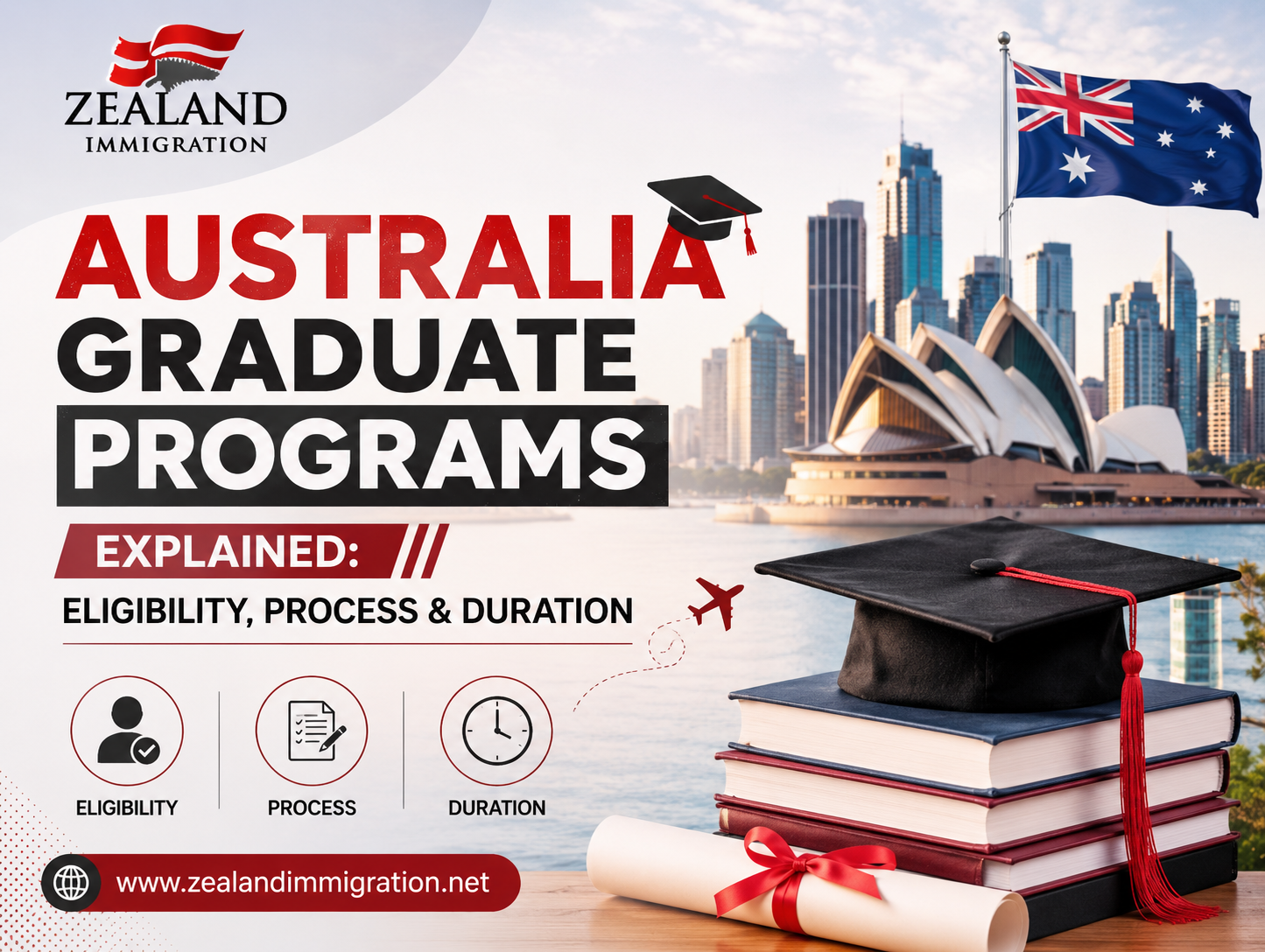
A lot of Indian students end up looking at Australia Graduate Programs once they finish their bachelor's degree, and honestly, it's not hard to see why. The universities carry weight internationally, the coursework tends to be hands-on rather than purely theoretical, and there's a fairly clear path from graduation to a job. Still, before anyone books a flight, it helps to actually know how postgraduate education works there, who gets in, what the paperwork looks like, and roughly how long you'll be studying.
Table of Contents
What Do Graduate Programs in Australia Actually Cover?
Postgraduate study Down Under isn't one single thing. It spans coursework master's degrees, research-based master's degrees, graduate diplomas, and graduate certificates, each sitting above a bachelor's degree in its own way. Some are built to sharpen skills you already have; others exist so you can switch fields entirely without starting from scratch.
Melbourne, Sydney, Brisbane, and Adelaide all host universities running these programs across business, engineering, health sciences, and IT, among plenty of other areas. Anyone who wants to Study in Australia at this level will notice the courses lean heavily on group projects, case studies, and sometimes compulsory placements, so you're not just sitting through lectures for two years, you're actually doing something with the material before you graduate.
Who Is Eligible?
Requirements shift a bit from one university to the next, but a handful of things show up almost everywhere:
- A recognised bachelor's degree, ideally in a related subject
- A minimum GPA or percentage, often somewhere in the 55–65% range
- Proof of English proficiency through IELTS, PTE, or TOEFL
- For some research-heavy or professional courses, relevant work experience or a solid statement of purpose
- Certain subjects, especially engineering and health-related fields, sometimes ask for specific prerequisite units from your undergraduate years
Top-ranked universities tend to push their cutoffs higher for popular courses, so it's worth checking the exact entry requirements for whatever you've shortlisted rather than assuming a general percentage will do.
The Application Process, Step by Step
Assuming you meet the eligibility bar, here's how things generally move forward:
- Shortlist your course and university. Look at the curriculum, where the campus actually sits, tuition costs, and what kind of post-study work rights come attached before settling on anything.
- Prepare your documents. Transcripts, degree certificates, English test scores, a resume, a couple of recommendation letters, and your statement of purpose, get these ready ahead of time rather than scrambling later.
- Submit your application. Most universities run this online through their own portal, though a good number of students go through a registered consultant just to avoid silly documentation mistakes.
- Receive your offer letter. This usually lands within a few weeks, though it can take longer depending on the intake and how competitive the course is.
- Accept the offer and pay your deposit. Once you do this, the university issues a Confirmation of Enrolment, or CoE you'll need this for the next step.
- Apply for your student visa. With the CoE, financial proof, and health insurance sorted, you're ready to file for the subclass 500 student visa.
None of this is complicated on paper, but small things trip people up, a missing transcript, a vague statement of purpose, and any of that can push your admission back an entire intake. Having someone check your file before you hit submit tends to save a lot of grief.
How Long Do These Programs Take?
Duration really comes down to what you're studying:
- Graduate certificates - around six months, meant as a quick, focused entry point
- Graduate diplomas - roughly a year
- Coursework master's degrees - usually one to two years, depending on the structure
- Research master's degrees - typically a year and a half to two years, with more independent work and a thesis toward the end
Some universities run multiple intakes a year, so your exact timeline might shift slightly depending on when you start and which teaching period you're placed in.
Choosing the Right Path for You
Whether you go for a certificate, diploma, or a full master's within Australia study programs really depends on what you're trying to get out of it. If the goal is a quick specialisation before jumping back into work, a shorter diploma or certificate probably makes more sense. If you're after a genuine career shift, deeper technical grounding, or you're eyeing skilled migration down the line, a full master's degree usually pays off more.
There's also more to weigh than just the classroom, post-study work rights, how strong the internship options are, and whether the university actually holds weight in your target industry all factor into how useful the qualification ends up being.
Final Thoughts
None of this needs to feel overwhelming once you break it down, know your eligibility, understand the steps, and keep the paperwork tight. Most delays in this process come down to avoidable things: a document sent late, a course chosen without checking the fine print, a visa file missing one piece of evidence.
If you'd rather have someone walk through it with you, Zealand Immigration India works with students from the shortlisting stage right through to visa documentation, so nothing important slips through the cracks.