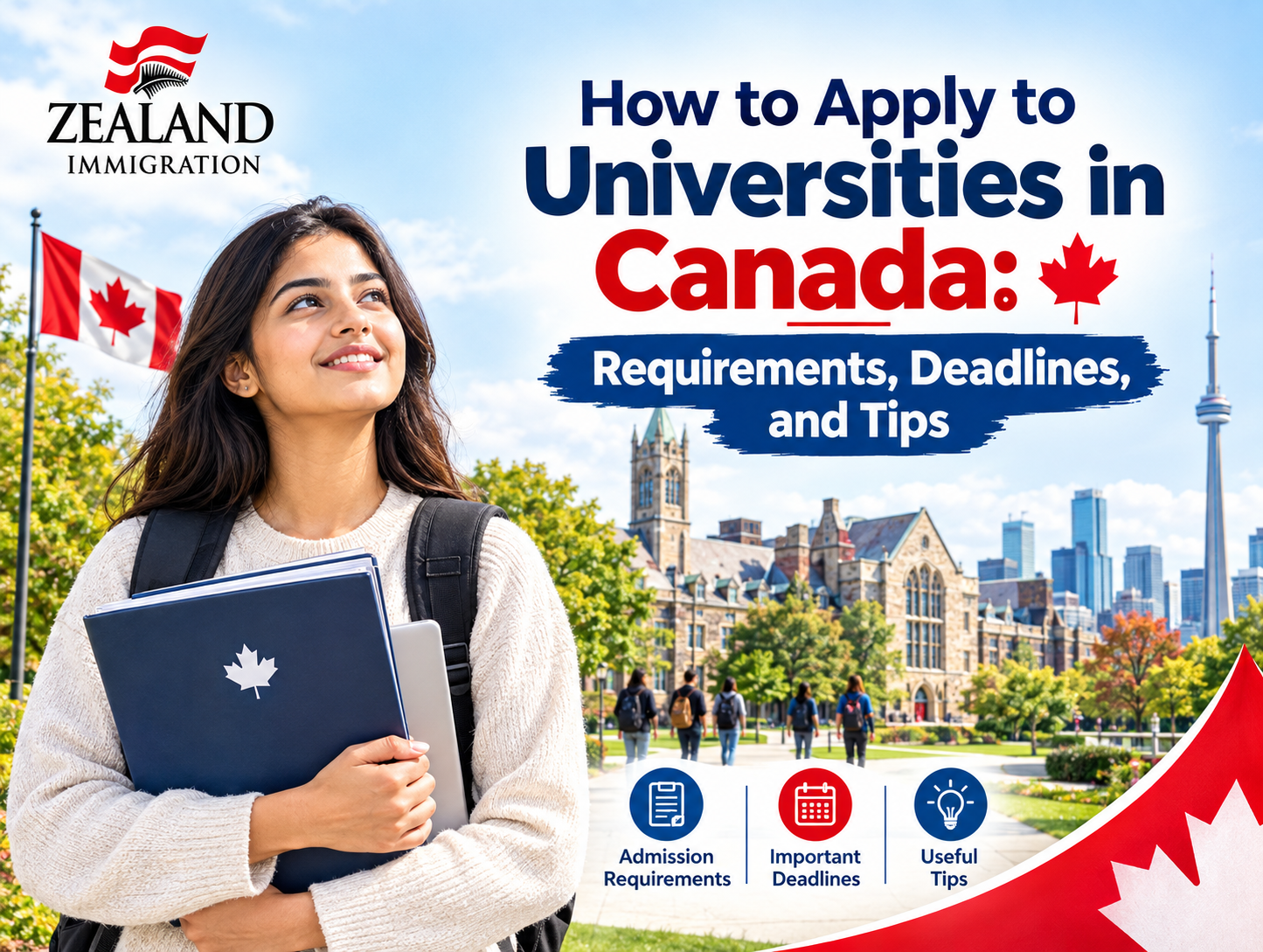
Every year, thousands of students from India pack their bags for Canada, drawn by respected degrees, friendly immigration pathways, and multicultural campuses. Before the packing comes the paperwork, though. A clear picture of how admissions work at the Universities in Canada can save you months of confusion and a few costly mistakes.
The process is not complicated, but it does reward planning. Anyone who wants to study in Canada should begin preparing about a year before their intended start date. That gives you time to sit language tests, gather documents, and compare programs without rushing.
Table of Contents
What Are the Basic Requirements?
Each institution has a different set of policies, but the main expectations remain more or less the same across the USA.
For undergraduate programs: Applicants are required to complete their Class 12 exams and receive decent marks. Some competitive courses such as nursing, engineering or computer science expect applicants to have higher marks along with specified subjects, for example, math and physics.
For postgraduate programs: Applicants need to have a recognized bachelor's degree and generally have to get at least 60 to 70 percent average. Some programs, like MBA, require the demonstration of work experience or GMAT or GRE scores.
In terms of English proficiency: The majority of applicants show their IELTS Academic, TOEFL, or PTE scores. The requirements for undergraduate programs are usually at least 6.0 or 6.5. The criteria for postgraduate courses are generally higher, as most universities are looking for a score of 6.5 or more. Some institutions also accept the Duolingo English Test, or waive the requirement if your earlier education was in English. Confirm this on the program page before you book a test.
Documents to Prepare Before You Apply
Collecting paperwork takes longer than most students expect. Attested marksheets and degree certificates can take weeks to arrange, so start this early, especially when you plan to Study Abroad in Canada and want to meet an early deadline.
Most applications ask for:
- A valid passport
- Academic transcripts and certificates
- English test scores
- A statement of purpose (SOP) explaining your goals
- Two letters of recommendation for postgraduate courses
- An updated resume or CV
- A portfolio or writing sample, if your program requires one
- Payment for the application fee, usually between CAD 100 and 200
If a document is not in English, you will need a certified translation.
Application Deadlines and Intakes
Canadian institutions run three main intakes: fall (September), winter (January) and, at a smaller number of schools, summer (May). September is the biggest and most popular.
For the September intake, applications generally open in the autumn of the previous year, and deadlines fall between December and March. High-demand courses often close earlier than others. For the January intake, deadlines usually land between August and October.
Scholarship and residence deadlines are frequently earlier than the admission deadline, so check them separately. As a general rule, aim to submit your application eight to twelve months ahead of your start date. The exact dates for universities in Canada differ from one school and program to the next, so always confirm on the official admissions page.
Step-by-Step Application Process
- Shortlist your programs. Compare course content, tuition, location, campus culture and career outcomes. Make sure the institution is a Designated Learning Institution (DLI), which is required for a study permit.
- Check the entry requirements. Note the grade cut-offs, test scores and any prerequisite subjects for each program.
- Take your language test. Book it early enough to retake it if you need a higher score.
- Write your SOP and request recommendations. Give your referees plenty of notice.
- Submit the online application. Most institutions use their own portals, although some provinces route applications through a central system.
- Pay the fee and track your status. Check your email, including the spam folder, for requests for extra documents.
- Accept your offer. Once you receive an offer, you will usually pay a tuition deposit and receive a Letter of Acceptance.
Applying for Your Study Permit
An offer of admission is not permission to enter the country. Once you hold your Letter of Acceptance, you must apply for a study permit through Immigration, Refugees and Citizenship Canada (IRCC). Depending on your province and level of study, you may also need a Provincial Attestation Letter (PAL). Some graduate students are exempt, so check your own situation.
You will need to show proof of funds for tuition and living costs, and you may be asked for biometrics and a medical exam. These rules, along with financial requirements, change regularly, so read the current guidance on the IRCC website. Anyone serious about wanting to Study in Canada should also read up on the Canada student visa process before paying any deposit.
Practical Tips to Strengthen Your Application
- Apply early. Seats and scholarships are limited, and early applications are often reviewed first.
- Tailor your SOP. A generic letter is easy to spot. Explain why this specific program and this specific school fit your plans.
- Be truthful. Inflated marks or invented experience can lead to rejection and even a ban.
- Apply to a mix of options. Choose a few ambitious picks, some realistic ones and at least one safe choice.
- Keep every deadline in one place. A simple spreadsheet prevents missed dates.
- Get expert help if you feel lost. The team at Zealand Immigration India can review your shortlist, documents and SOP before you submit.
If you are still choosing a destination, it helps to read about the wider picture of how to study abroad in Canada, including living costs, part-time work rules and life after graduation. Applying with your eyes open beats applying in a hurry.
Final Thoughts
Applying to Canada comes down to three things: knowing what each program expects, respecting the deadlines and presenting yourself honestly and clearly. Start early, stay organised, and treat each document as part of one story about who you are and where you want to go. If you would like personal guidance from shortlisting to visa filing, Zealand Immigration India is ready to help you take the next step.