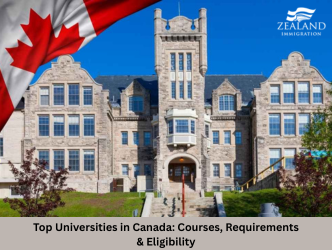
Every year, thousands of students from India look at the world map and ask one question: where will my degree take me the furthest? Canada keeps landing on that shortlist, and not by accident. If you decide to Study Abroad in Canada, you get respected institutions, a fair cost of living, and real career options once your classes end. Here are ten reasons the country deserves a serious look before you finalise your destination.
Table of Contents
- 1. Globally Respected Universities and Colleges
- 2. Tuition and Living Costs That Are Easier to Plan For
- 3. A Wide Choice of Programs and Institutions
- 4. Part-Time Work Rights While You Study
- 5. Post-Graduation Work Permit Opportunities
- 6. Clear Routes Toward Permanent Residency
- 7. A Safe, Welcoming and Multicultural Society
- 8. Co-op and Hands-On Learning
- 9. Scholarships and Financial Support
- 10. A Visa Process That Rewards Good Preparation
- Final Thoughts on Choosing Study Abroad in Canada
1. Globally Respected Universities and Colleges
The diplomas from Canada are recognised globally by both employers and institutions of higher learning. The institutions are either publicly financed or regulated by the provincial government hence ensuring consistency regardless of the institution that one decides to join. Many Canadian universities also appear regularly in international rankings, which adds weight to your resume when you apply for jobs back home or elsewhere.
2. Tuition and Living Costs That Are Easier to Plan For
Compared with some other popular destinations, Canada usually works out friendlier on the wallet. Costs do vary by city and program, and a student in a smaller town will often spend noticeably less on rent and daily needs than one in a major metro. The point is that you can build a realistic budget early, which matters a lot when parents are funding the plan or an education loan is involved.
3. A Wide Choice of Programs and Institutions
Whatever your academic interest, whether it is engineering, nursing, business analytics, hospitality, design or environmental science, there is often an appropriate program waiting. The universities provide bachelor’s degrees, whereas colleges offer diploma and advanced diploma programs with a more practical approach. This variety means you are not forced into one path just because it is the only one available.
4. Part-Time Work Rights While You Study
Eligible international students can generally work off campus for a limited number of hours per week during the academic term, and for longer during scheduled breaks. That income will not cover everything, but it helps with groceries, transport and small expenses, and it gives you a first taste of Canadian workplaces. Work rules are set by the government and get updated from time to time, so always check the latest official conditions before you plan around them.
5. Post-Graduation Work Permit Opportunities
This is one of the biggest draws. After completing an eligible program at an eligible institution, many graduates can apply for a post-graduation work permit and gain Canadian work experience. Your Canada Student Visa, which is officially called a study permit, is the document that starts this journey, so choosing a program that qualifies matters from day one. Eligibility rules have tightened in recent years, so verify the program and institution status before you pay any deposit.
6. Clear Routes Toward Permanent Residency
Canada openly welcomes skilled newcomers, and former international students are often well placed to apply. Canadian study, local work experience and English or French language ability all count in the points-based systems used for permanent residency. Provincial nominee programs also look favourably at graduates who studied in their region. Nothing is guaranteed, but the pathway is far more visible than in many other countries.
7. A Safe, Welcoming and Multicultural Society
Canada is known for being tolerant and diverse. Large Indian communities in cities like Toronto, Vancouver, Calgary and Brampton mean you will find familiar food, festivals, grocery stores and places of worship within reach. Campuses also run orientation programs and student support services, which helps a lot during the first few homesick months.
8. Co-op and Hands-On Learning
Many of the programs have work terms or internship as part of their program structure where you get some exposure to an industrial environment as a part of your learning process. Students who pursue their Study in Canada through a co-op program tend to come out with better resume and professional connections, which may reduce the stress involved in the job search process.
9. Scholarships and Financial Support
Many Canadian institutions offer entrance awards, merit-based scholarships and bursaries for international applicants. Postgraduate students may also find research or teaching assistantships through their department. Awards differ widely from one school to another, so read each institution’s scholarship page closely and keep an eye on deadlines instead of assuming you will be picked automatically.
10. A Visa Process That Rewards Good Preparation
An application for a Canada student visa asks for plenty of paperwork, including an acceptance letter, proof of funds, identity documents and a clear explanation of your study plan. The process is detailed but predictable, and most refusals come down to weak documentation or unclear intent, not bad luck. Working with a trusted guide like Zealand Immigration India can help you organise your file properly and avoid the small mistakes that cost time.
Final Thoughts on Choosing Study Abroad in Canada
Quality teaching, workable costs, work rights and a visible route to settling down are a rare combination, and that is why study abroad in Canada continues to attract so many ambitious students. Before you apply, compare programs honestly, check current government rules, and plan your finances with some buffer. If you want personal help with course selection, documents or the application itself, Zealand Immigration India can walk you through each step.