Getting your offer letter feels great, but then a very practical question lands: where are you going to live? Most students we speak with focus on visas and fees first and leave housing until late. That’s a mistake, because the good rooms go early. UK student accommodation mainly comes in three forms: university halls, purpose-built student accommodation (PBSA) and private rentals. They differ in price, in freedom, and in how easy they make your first month.
Table of Contents
- What Are the Main Types of UK Student Accommodation?
- University Halls of Residence: Room Types, Costs and Who They Suit
- Purpose-Built Student Accommodation (PBSA): What It Is and What the Rent Includes
- Private Rentals in the UK: Shared Houses, Guarantors and Tenancy Rules
- How to Choose the Right Student Accommodation for Your Budget and Course
- When and How to Book: Deadlines and Safety Checks for International Students
- Final Thoughts
What Are the Main Types of UK Student Accommodation?
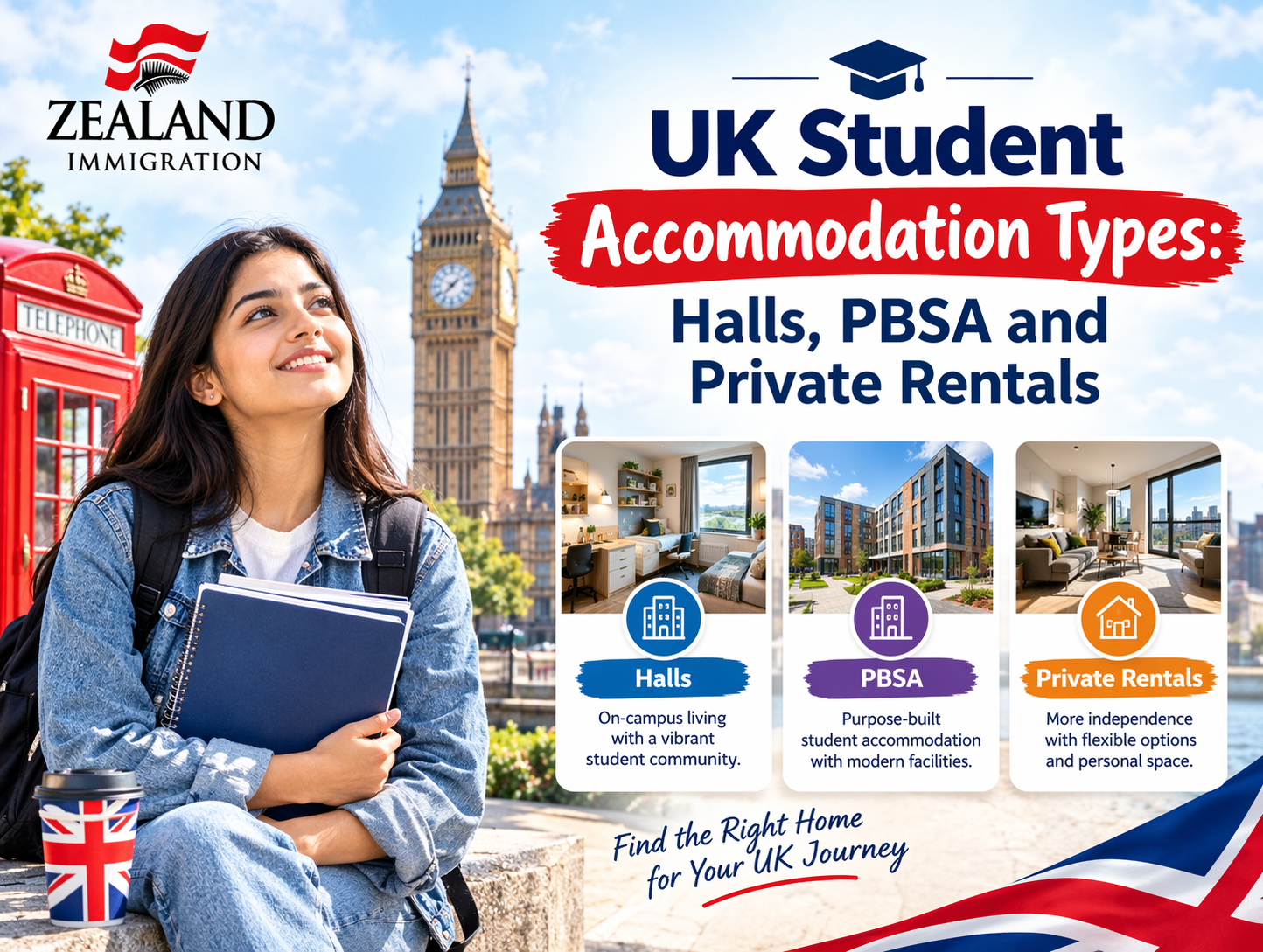
Halls belong to the university. PBSA blocks are built for students but run by private companies. Private rentals are normal rooms or houses let by a landlord or agent. Most first-years end up in halls or PBSA, and a lot of second and third-years move into shared houses once they know people.
University Halls of Residence: Room Types, Costs and Who They Suit
Halls sit on campus or a short walk away, so they’re the usual pick for new students arriving from abroad. You land, collect your key and you’re home.
Rooms vary. Some have a shared bathroom down the corridor. Ensuite rooms have their own bathroom but share a kitchen. Studios are small self-contained flats. Meals are offered at a few universities, though most halls are self-catered.
The big plus is that everything is in one place. Bills and internet are usually in the rent, staff are close if something breaks, and you’ll meet people in your first week without trying. The downside is that rooms run out fast once offers go out, and the contract dates are fixed, so check them against your course timetable before you accept.
Purpose-Built Student Accommodation (PBSA): What It Is and What the Rent Includes
PBSA is the newer, shinier option. Many blocks have a gym, a lounge, study rooms and good security. Rent often covers electricity, water and Wi-Fi, so your monthly budget stays predictable.
Price is where it bites. A studio in a PBSA block can cost far more than a basic hall room, so compare the full weekly cost instead of the first number you see. If you plan to Study in London, expect the highest rents in the country, and know that the transport zone can change the price by a lot. Before paying a deposit, ask about cancellation and whether the provider wants a guarantor.
Private Rentals in the UK: Shared Houses, Guarantors and Tenancy Rules
Private renting means dealing with a landlord or letting agent yourself. Most students try it from second year, when they’ve found people they want to live with.
You get more say over the area and your housemates, and a shared house often costs less per person than PBSA. Kitchens and living rooms tend to be bigger as well. The catch is admin. Gas, electricity and broadband are often billed separately, and many landlords ask for a UK guarantor. International students without one can look at rent guarantee companies or offer a few months of rent upfront. Check that the deposit goes into an approved protection scheme and that the landlord holds any licence the council requires.
Read the tenancy length too. Twelve months is common, even when your course only runs for nine. Some students who Study in London save money by renting a bit outside the centre and using the bus or Tube.
How to Choose the Right Student Accommodation for Your Budget and Course
Start with money. Add up rent, food, travel and any bills that aren’t included, and see what’s left. Then be honest about how you like to live. If you want people around, halls work. If you want a door that closes, a PBSA studio is hard to beat. If you’d rather run your own household, go private.
Location matters more than most people think. A cheap room forty minutes from campus costs you fares and time every single day.
Budgeting for Living in the UK also covers things outside rent, like energy bills, a travel pass and contents insurance. Full-time students are usually exempt from council tax, but the university normally has to issue a certificate first.
When and How to Book: Deadlines and Safety Checks for International Students
Book early. Halls often open applications soon after you accept your place, and popular PBSA blocks can be full months before autumn.
A few habits will keep you safe. Read the whole contract, especially the parts about notice and damage charges. Don’t send money to anyone you haven’t verified, and be wary of a landlord who won’t do a video tour. When you arrive, photograph the room and email any problems straight away so there’s a record. Your university accommodation office can usually share a list of approved landlords.
A checked booking makes living in the UK much less stressful in those first weeks. Zealand Immigration India can go through your options with you before any money changes hands.
Final Thoughts
There’s no single right answer. UK student accommodation works when it fits your budget, your course dates and the way you like to live. Halls are the easiest start, PBSA gives comfort, and private rentals give freedom. Whichever you choose, book early and check every contract before you pay.
Planning to study in the UK? Book a free consultation with Zealand Immigration India today and get expert help with your accommodation, visa, and pre-departure steps.